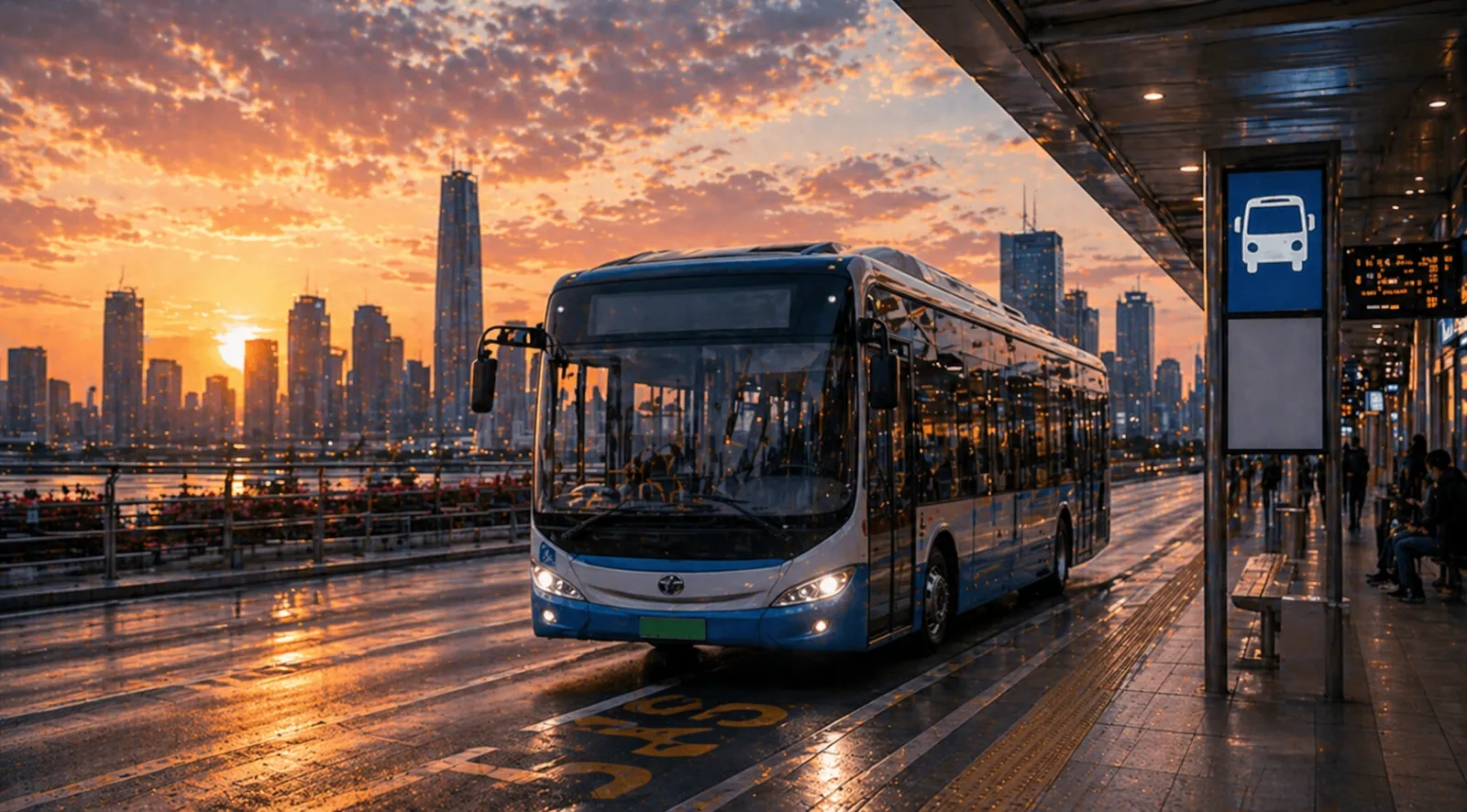
Bus
in China
Public buses are cheap and useful in some cities, but they are usually not the first choice for most first-time visitors.
Quick answer
Quick answer
For most first-time visitors in major Chinese cities, the metro is usually easier than buses. Use buses when the metro is unavailable, when you already know the route, or in smaller cities where buses are the main public transport option. Bus routes and stops may be mostly in Chinese, so use a map app and confirm the direction before boarding.
How to take a bus in 5 steps
Plan the route before boarding, then keep your map open so you always know where to get off.
Plan the route
Use a map app to confirm the bus number, travel direction, boarding stop, and destination stop before you leave.
Plan the route
Use a map app to confirm the bus number, travel direction, boarding stop, and destination stop before you leave.
Wait at the correct stop
Check the bus number and direction shown at the stop. Stops on opposite sides of the road usually serve different directions.
Wait at the correct stop
Check the bus number and direction shown at the stop. Stops on opposite sides of the road usually serve different directions.
Pay when boarding
Scan a transport QR code, tap a local transport card, or insert exact cash. Payment methods vary by city and bus operator.
Pay when boarding
Scan a transport QR code, tap a local transport card, or insert exact cash. Payment methods vary by city and bus operator.
Track your location
Keep your map app open and follow your location during the ride, especially when announcements and stop names are only in Chinese.
Track your location
Keep your map app open and follow your location during the ride, especially when announcements and stop names are only in Chinese.
Prepare to get off
When your stop is approaching, press the stop button if available or move toward the exit. Some buses do not stop unless a passenger signals.
Prepare to get off
When your stop is approaching, press the stop button if available or move toward the exit. Some buses do not stop unless a passenger signals.
How to pay
Payment methods differ by city, so prepare a transport QR code or exact cash before boarding.
Alipay transport QR code
Open Transport, choose your city, and activate the local bus QR code. Some cities may require separate QR codes for bus and metro.
Exact cash
Some buses still accept coins or small notes, but the fare box usually does not give change. Prepare small RMB cash in advance, as many local bus fares are low and fixed.
Local transport card
Not recommendedNot usually worth setting up for a short visit because purchase, top-up, and refund rules vary by city. It can still be useful for a longer stay.
Look for payment instructions near the front door. If the bus requires distance-based payment, you may need to tap or scan again when getting off.
When buses make sense
Buses are useful in specific situations, but they are not usually the easiest first choice in major cities.
Good for
in smaller cities
Buses are more useful where metro coverage is limited or unavailable.
for known routes
They work better when you already know the bus number, direction, and destination stop.
as a backup
They can help when metro does not reach your destination or taxi prices are high.
Choose another option when
when you are in a hurry
Traffic can make bus travel slower and less predictable than metro.
with heavy luggage
Crowded buses, steps, and limited space can make luggage inconvenient.
if you cannot confirm the route
If the route, direction, or stop name is unclear, metro or ride-hailing is usually safer.