Dietary Needs
in China
Helpful information for vegetarians, people with allergies, and anyone with dietary preferences.
Quick answer
Quick answer
Important note
Not all Chinese food is spicy
Spice levels vary by region. Sichuan, Chongqing, Hunan and Guizhou food can be spicy, while many Cantonese, Shanghai-style and northern dishes are milder.
Tips
- Ask for “not spicy” or “mild”.
- Choose steamed, stir-fried, or soup dishes.
Vegetarian food in China
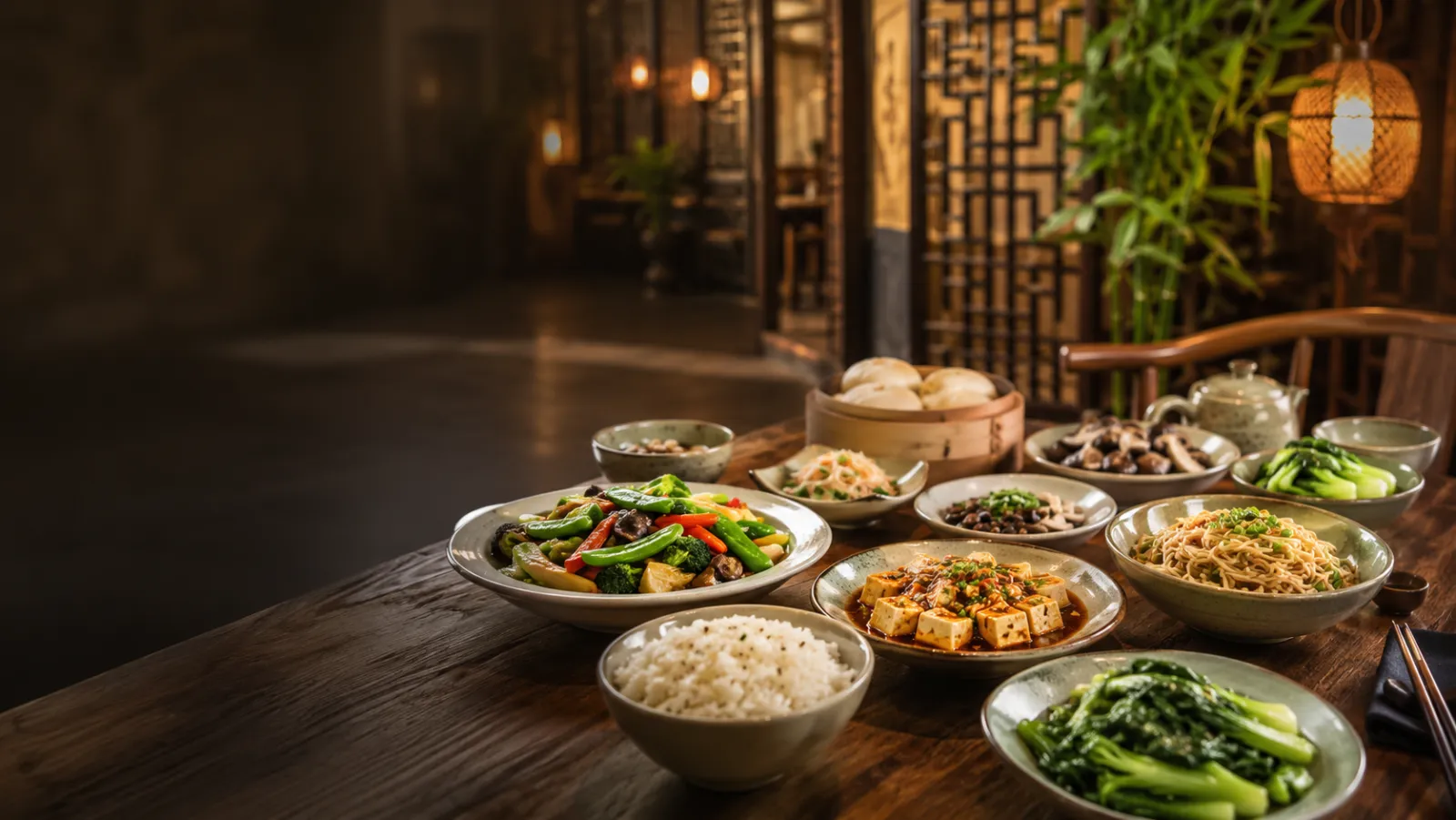
Vegetarian options exist, but “vegetarian” does not always mean egg-free or dairy-free. Some dishes may still use meat broth, oyster sauce, lard, or small pieces of meat.
Tips
- Say you are a strict vegetarian if needed.
- Ask about ingredients and cooking oil.
Food allergies
If you have food allergies, prepare the ingredient names in Chinese and show them to restaurant staff before ordering. Do not rely only on English.
Tips
- Be specific about your allergy.
- Avoid dishes you are unsure about.
Halal / Muslim restaurant
Halal food is available in many cities, especially near Muslim communities or Lanzhou noodle restaurants, but options vary by location.
Tips
- Look for halal restaurants or 清真 signs.
- Lanzhou beef noodles are often a good choice.
No pork, no beef, no seafood
If you avoid pork, beef or seafood, tell staff clearly before ordering. Some dishes may contain one of these even if the name does not show it.
Tips
- Use the Chinese phrases or cards below.
- Double-check sauces and broths.
Ingredients that may be hidden
Chinese dish names may not list every ingredient. A dish may contain pork, seafood, peanuts, coriander, meat broth, oyster sauce, or chili even if the translated name does not make it obvious.
Tips
- Ask about ingredients if you have restrictions.
- When in doubt, choose simple dishes.
7. Show these Chinese cards to staff
You can show or save these cards on your phone.
我是素食者。
Wǒ shì sùshízhě.
I am vegetarian.
我不吃猪肉。
Wǒ bù chī zhūròu.
I do not eat pork.
我不吃牛肉。
Wǒ bù chī niúròu.
I do not eat beef.
我不吃海鲜。
Wǒ bù chī hǎixiān.
I do not eat seafood.
请不要放辣椒。
Qǐng búyào fàng làjiāo.
Please do not add chili.
我对花生过敏。
Wǒ duì huāshēng guòmǐn.
I am allergic to peanuts.
Tip: Hand this to the staff before ordering for best results.
8. Useful dietary phrases
Swipe to see pinyin and when to use →
Tip: Take a screenshot or show this table to staff if needed.
Do
Tell staff about your dietary needs before ordering.
Use Chinese phrases or cards to communicate.
Ask about ingredients and cooking methods.
Start with simple dishes you recognize.
Thank the staff for helping you.
Avoid
Assuming a dish is vegetarian or non-spicy.
Relying only on English menus.
Ignoring allergies or hidden ingredients.
Being afraid to ask questions.
Ordering if you are not sure about the ingredients.